
The Challenger Model for Tech-Driven Innovation
One of North America's largest privately owned carriers turned a single connectivity layer into a customer portal, an M&A integration playbook, and a compliance safety net.
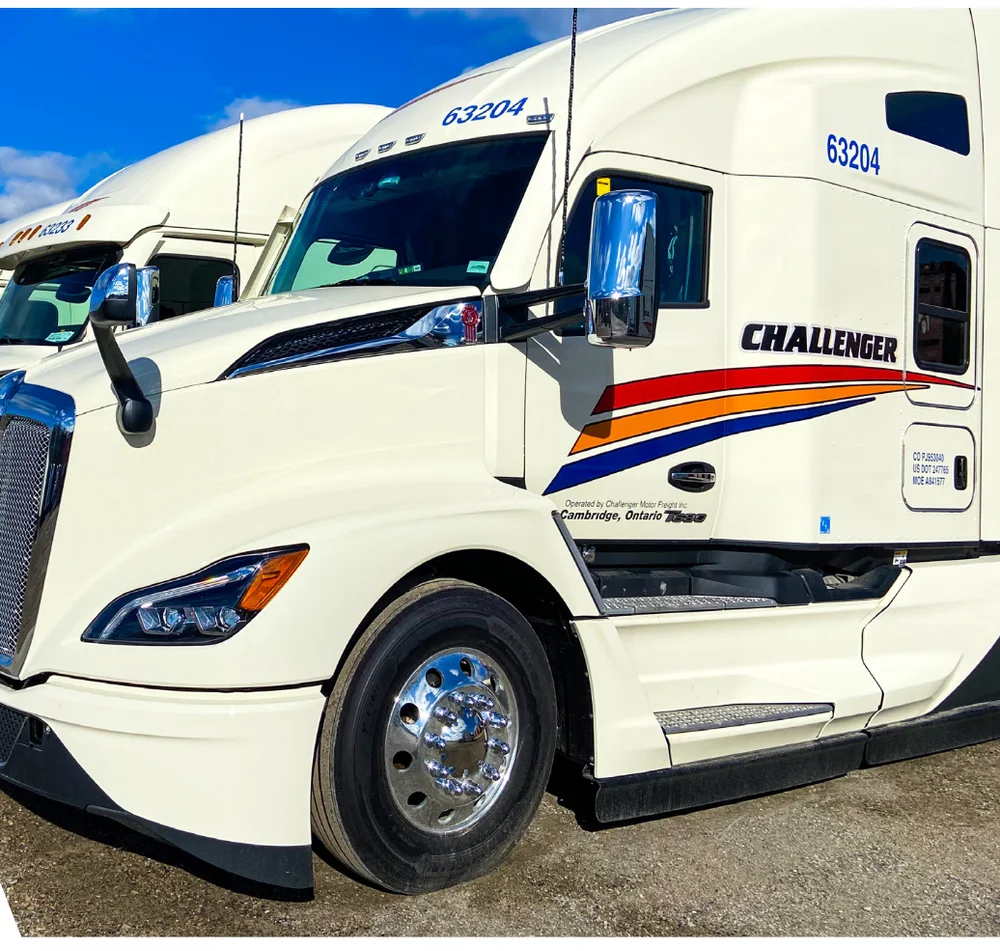
Headquarters
Cambridge, Ontario
Fleet
One of North America's largest privately owned, asset-based carriers
Border crossings
~500 per day, Canada–U.S.
Motor carriers and logistics companies have to evolve daily to keep up with dynamic transportation challenges. The ones that succeed are the ones simplifying work and removing inefficiencies — and few examples make that clearer than Challenger Motor Freight.
Challenger has spent the past several years moving its business forward with an integration layer that networks its in-house systems, applications, external platforms, and business partner technologies. Connecting systems that used to operate independently has let Challenger deliver unified services to customers, office staff, and drivers — while freeing up time and resources to innovate and operate faster than competitors.
When Challenger implemented a new ELD platform from ISAAC Instruments, the company gained access to Tranzactor, Tranztec's integration platform. Zahi Mitri, Challenger's Vice President of Innovation and Technology, describes discovering it as "finding a goldmine." Realizing the possibilities, Challenger built a roadmap for integrating systems and data across the enterprise — and modernized nearly every part of its business by leveraging the platform.
Leveling Up Customer Service
Challenger's TMS provider offered a one-size-fits-all customer portal for tracking loads and gathering information. The portal was unstable and unsupported, frustrating both customers and Challenger's own operations team.
After months of trying to fix the problem with the TMS provider, Challenger looked at outside options — including an expensive Salesforce-powered storefront. The team realized it already had what it needed.
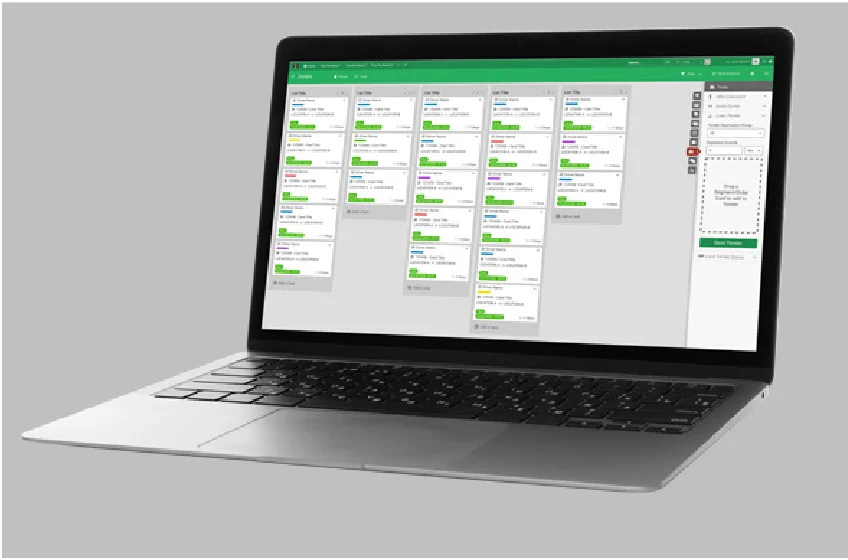
Challenger routed load-tracking data through Tranzactor — the same middleware ISAAC uses to integrate its ELD telematics with various TMS platforms — and fed it directly into a user-friendly customer web portal built on VIA, Tranztec's customizable workflow platform.
The result is a sleek, self-service customer portal backed by reliable, real-time data, supported by Challenger's existing staff with no custom code development required. Customers no longer have to call for a status update — they just check the portal.
Supporting Mergers and Acquisitions
System integration comes up in every conversation about a merger or acquisition, and handling it poorly can erase the economies of scale a deal was supposed to create. Research from Bain & Company found that post-merger integration problems are responsible for more than half of all deal failures, in large part because roughly half of the synergies a merger is supposed to create are tech-enabled.
Challenger uses Tranzactor to fold acquired-company data straight into its TMS. When Challenger acquired a 100-truck fleet out of Windsor, Ontario — running a completely different TMS and ELD platform — Tranzactor made it possible to integrate that fleet's data for full operational transparency, feeding straight into Challenger's existing customer portal and creating one stop for clients instead of two systems to check.
"Think of the future of mergers and acquisitions. Whatever system a carrier is on, no problem. From an integration perspective, we have a real secret sauce with Tranzactor."
Zahi Mitri, VP of Innovation and Technology, Challenger Motor Freight
Improving Compliance and Claims Management
The Safe Food for Canadians Act and the U.S. Food Safety Modernization Act rewrote the rules for temperature tracking and food traceability across the supply chain — and disconnected TMS and telematics systems make staying compliant a tedious, manual job.
Challenger used its integration layer to end manual temperature capture and reporting altogether, publishing to-the-minute temperature-controlled data straight to its customer portal so clients can monitor freight temperature and know their cargo is safe.
The team also uses VIA's customizable, if-then workflow builder to issue automatic alerts for temperature excursions. Catching problems early instead of after the fact has helped Challenger avoid hundred-thousand-dollar loss claims on perishable food and pharmaceutical freight.
Advancing Automation
Beyond compliance, Challenger looked across the whole operation for places where automation could replace manual clicking. VIA's visual, if-then workflow builder let the team create new driver workflows that automate communications and invoicing — without the cost of custom software development or the compromise of a one-size-fits-all application.
Rather than manage automation centrally from IT, Challenger opened the process up: any department can submit a use case, and IT supports individual team needs with new data and automation instead of owning every workflow itself. That's let alerts and automation take over manual tasks so people can focus on the work that actually needs a human.
Streamlining Customs
Challenger crosses the Canada-U.S. border roughly 500 times a day — enough volume that customs clearance is a constant, manual drain on a dedicated team.
Challenger is integrating its TMS with CrimsonLogic, an electronic trade-clearance system, so the two systems share data automatically over APIs — pre-clearing loads and processing alerts without manual work. The team expects the connection to cut the steps required to cross a load and eliminate wasted time at the border for drivers.
Accelerating Paybacks
Challenger expects a solid return on its investment in Tranzactor and VIA — one that keeps growing as more use cases get scoped and added. Today's savings come from:
- • Eliminating manual tasks, freeing up capacity for higher-value work
- • Reallocating full-time staff to higher-order work
- • Reducing waste and avoiding claims costs
- • Improving customer experience to earn additional business
Talk to us about a similar integration
Challenger runs the same connectivity layer available today through Tranzactor Toolkit — built for carriers and fleets juggling a fragmented mix of TMS, telematics, and customer-facing systems.